Invisible in Plain Sight: Why Qualified Talent Gets Filtered Out of Agency Searches Before Anyone Sees Their Name
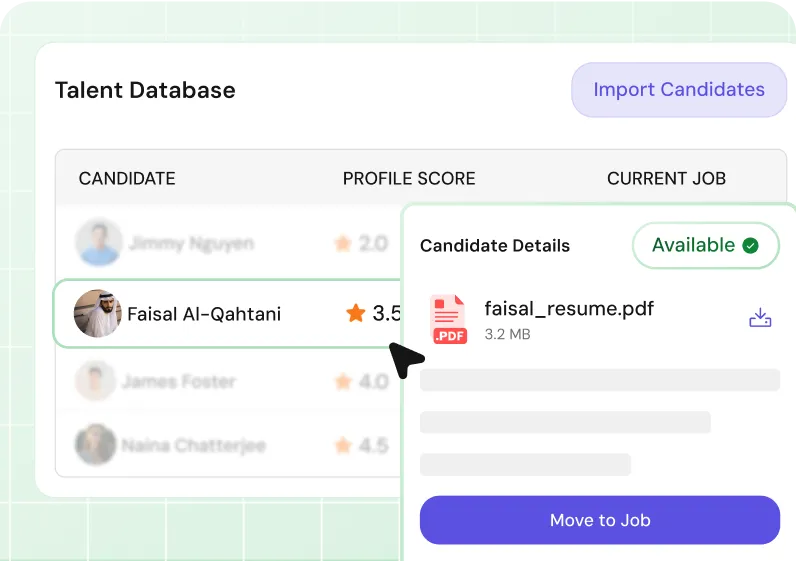
Photo: talent agency database search computer screen professional, via akriviahcm.com
There is a version of the talent search that most models never witness. It happens inside agency software platforms, casting databases, and internal rosters—a series of filters, parameters, and algorithmic sorting mechanisms that narrow thousands of profiles down to a shortlist before a single human eye lands on a headshot. For a significant portion of working talent in the United States, the problem is not that they lack the look, the experience, or the professional portfolio. The problem is that they never appear in the search results at all.
This is the database gap—a structural issue sitting at the intersection of technology, industry habit, and outdated categorization standards. Understanding it is no longer optional for talent who want to remain competitive.
How Searches Actually Work Inside Agencies
Most mid-to-large talent agencies and casting platforms operate through structured database systems. When a client submits a casting brief—say, a commercial requiring a woman between 28 and 35, with athletic build, based in the Southeast, available for a two-day shoot in Atlanta—the agency's internal software begins filtering. Parameters are applied in sequence: location, age range, physical measurements, availability flags, union status, category tags, and keyword associations.
The results that surface are not a complete picture of qualified talent. They are a picture of talent whose profiles align precisely with the search logic being applied. This distinction matters enormously.
If a model's profile lists "Southeast" as a region but their primary market is logged as "New York," a location-based filter may exclude them entirely. If their measurements were entered during onboarding two years ago and have since changed—but were never updated—they may be filtered out of searches where they would otherwise qualify. If their specialty tags use terminology that has drifted out of common usage ("plus size" versus "curve," for instance, or "commercial print" versus "lifestyle"), the search engine may not recognize them as a match.
None of this reflects a judgment about the talent's merit. It is a data problem.
The Outdated Criteria Problem
The modeling and talent industry has undergone substantial transformation over the past decade. New categories have emerged—content creators, brand ambassadors, micro-influencers with niche audiences, performers who straddle traditional acting and digital media. Yet many agency database systems were built around classification structures that predate these categories.
When a database does not have an accurate category for a talent's primary value proposition, that talent often gets filed under the closest approximation—or worse, left without a meaningful tag at all. In search environments that rely on structured fields rather than open-ended descriptors, an untagged or miscategorized talent is functionally absent.
This is not a hypothetical concern. Industry professionals who work with talent management software regularly encounter profiles that are technically active but practically invisible because their metadata has not kept pace with how clients are now searching. The talent exists in the system. The system simply cannot find them.
Human Factors That Compound the Problem
Technology is not the only culprit. Human decisions—made at the agency level, often under time pressure—shape what gets entered, updated, and maintained in a talent's profile.
Onboarding processes at many agencies are front-loaded: a model joins the roster, their initial profile is built, and the expectation is that updates will follow as their career develops. In practice, those updates are inconsistent. Agents managing large rosters do not always have the bandwidth to refresh profiles after every booking, every new training credential, or every market expansion. The result is that a model who has added significant experience since joining an agency may be presenting to the search algorithm as the less-developed version of themselves that existed at onboarding.
There is also the issue of roster positioning. In many agencies, the most actively promoted talent—those generating consistent bookings—receive the most profile attention. Newer or mid-tier roster members may see their profiles stagnate simply because no one is prioritizing the maintenance work.
What Talent Can Do to Close the Gap
The first and most direct step is to treat your database profile as a living document rather than a one-time submission. Request access to review your profile within your agency's system at least twice a year. Verify that measurements, availability, market coverage, and specialty tags are current and accurately reflect your capabilities.
Second, familiarize yourself with the terminology that clients and casting directors are currently using in your category. Industry language shifts. If your profile uses terminology from five years ago, it may not match the language being entered into search fields today. Staying current on how your market segment is being described—through industry publications, trade directories, and platforms like Model Database—gives you the vocabulary to ensure your profile remains searchable.
Third, pay attention to keyword fields, bios, and any open-text sections of your profile. These areas are often underutilized, but they represent an opportunity to include the descriptive language that structured fields may not capture. A well-written bio that naturally incorporates relevant industry terms can serve as a secondary discovery mechanism when primary filters produce incomplete results.
Fourth, maintain your own documentation of bookings, client categories, and market experience. This is not only useful for your own career tracking—it gives you concrete information to bring to your agency when requesting a profile update. Rather than asking generally for a refresh, you can provide specific, documented additions that reflect your actual body of work.
The Broader Implication for the Industry
The database gap is not a problem that talent alone can solve. Agencies and platform providers share responsibility for maintaining classification systems that reflect how the industry actually operates today, not how it operated when their software was first built. As the talent and entertainment landscape continues to diversify—in terms of talent types, booking formats, and client expectations—the systems used to match talent with opportunity must evolve at a comparable pace.
For talent, the immediate takeaway is this: visibility is not passive. In a database-driven industry, being qualified is a necessary condition for getting work, but it is not a sufficient one. Your profile is your presence in the rooms where decisions are being made. Ensuring that presence is accurate, current, and legible to the systems doing the searching is among the most consequential professional investments you can make.