Who Gets the Call: How Agency Backend Systems Quietly Decide Which Talent Works

There is a moment every working model knows well: the waiting. A client brief circulates through an agency, a search gets run, and within minutes, a shortlist emerges. To the talent, that process feels opaque—almost arbitrary. To industry insiders, however, it is anything but random. It is the direct output of a database query, shaped by years of administrative decisions that most talent never had any part in making.
The systems agencies use to manage their rosters—proprietary talent management platforms, adapted CRM tools, or in some cases, elaborate spreadsheet hybrids—are rarely discussed in public-facing conversations about the modeling industry. Yet these backend architectures may exert more influence over a talent's booking frequency than their composite card, their social following, or even their relationship with their agent.
The Invisible Architecture of a Talent Roster
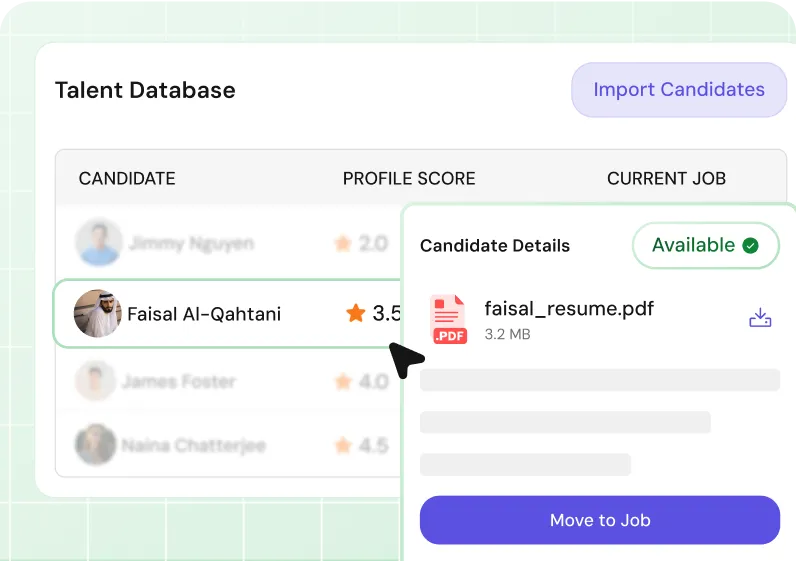
Most mid-to-large talent agencies in the United States operate through some form of structured database. The leading platforms—tools like Models.com's internal systems, agency-specific builds, or adapted software from adjacent industries—allow agencies to catalog talent by a range of searchable attributes: measurements, hair color, skin tone, experience level, location, special skills, and dozens of other variables.
In theory, this creates a frictionless search environment. A client needs a fit model between 5'9" and 5'11" with commercial print experience in the Southeast? The system should surface the right candidates immediately.
In practice, the results depend entirely on how the data was entered in the first place.
Tagging inconsistencies are among the most common sources of invisible career damage. A talent who does both runway and commercial work may be tagged exclusively under one category if the agent who onboarded them made a judgment call during intake. If that tag is never revisited, the talent simply will not appear in searches outside that narrow classification—regardless of their actual range or the breadth of their portfolio.
"The way someone gets entered into the system on day one tends to follow them," said one former agency coordinator who spent several years managing rosters at a mid-size New York firm. "Unless someone actively goes back and audits those profiles, the original tags stick. And most agencies don't have the bandwidth for that kind of ongoing maintenance."
When the Database Becomes the Decision-Maker
The practical consequence of these structural gaps is that client submissions increasingly reflect the quality of a database rather than the quality of a roster. Agents working under time pressure—responding to a client brief with a two-hour turnaround, for instance—rely almost entirely on what the search returns. There is rarely time for a manual scroll through the full roster, let alone a thoughtful reconsideration of talent who might fit but weren't surfaced by the query.
This dynamic creates what industry observers have begun calling a "first-result advantage." Talent whose profiles are thoroughly tagged, regularly updated, and formatted in alignment with how the agency's system organizes data will appear consistently at the top of internal searches. Those whose profiles are incomplete, inconsistently categorized, or simply entered with less care will surface rarely—or not at all.
The implications are significant. Two models with comparable experience and marketability can have dramatically different booking rates based solely on how their data is structured internally. One gets the call. The other waits.
Organizational Hierarchy and the Hidden Tier System
Beyond tagging, the organizational logic of agency databases often encodes a hierarchy that talent themselves may be unaware of. Many systems allow agents to assign internal priority rankings, "featured" designations, or custom flags that elevate certain profiles in search results. These designations are typically applied at the discretion of individual agents or agency leadership—and they are not disclosed to talent.
For talent at agencies with tiered internal structures, this means that being technically "on the roster" does not guarantee equal visibility. A model signed to a large agency may share database space with dozens of other professionals in their category, but if they have not been flagged as a priority submission, they may be systematically deprioritized every time a relevant brief comes through.
This is not necessarily the product of bad intent. Agencies have always operated with informal hierarchies—the talent with the strongest relationships, the most bookings, or the highest earning potential naturally receive more attention. What has changed is that these hierarchies are now encoded into software, making them more rigid, less visible, and far harder to challenge or appeal.
The Update Gap: Stale Data in a Fast-Moving Market
Another structural vulnerability is the pace at which talent profiles are updated relative to how quickly careers evolve. The modeling industry moves quickly. A talent who was primarily booked for editorial work two years ago may have since developed a strong commercial portfolio. An influencer who joined an agency's digital division may have tripled their following. A fit model may have transitioned into spokesperson work.
If those developments are not reflected in the agency's internal database, the talent continues to be searched and submitted based on an outdated profile. Clients receive submissions that don't reflect current capabilities. Opportunities that should align with where a talent's career actually is get routed to someone whose profile happens to be more current—even if their actual work is less relevant.
The burden of flagging these updates often falls on talent themselves, who may not understand that their internal profile exists, let alone that it requires ongoing maintenance. Agencies that do not have formal processes for periodic profile audits are effectively allowing their roster data to drift further from reality with each passing season.
What This Means for Talent Navigating the Current Market
For working models and emerging talent, the existence of these backend dynamics suggests a set of practical considerations that are rarely discussed in standard career advice.
First, understanding what information your agency holds about you—and how it is categorized—is a legitimate professional concern, not an act of distrust. Requesting a profile review, or simply asking your agent to walk through how your profile is structured in their system, is reasonable due diligence.
Second, the completeness of your onboarding materials matters more than most talent realize. Every attribute that is accurately documented at intake is a potential search match later. Gaps in that initial data entry are gaps in future discoverability.
Third, career evolution should be communicated proactively and in specific terms. Rather than simply informing an agent that you've been doing "more commercial work," providing concrete examples—specific bookings, new skills, updated measurements—gives the agency the raw material to actually update your profile rather than simply acknowledging the change in conversation.
A Structural Problem Requiring Structural Solutions
The deeper issue raised by all of this is not one of individual negligence. Most agency staff are managing large rosters under real time constraints, and database maintenance is rarely treated as a revenue-generating activity. The result is that systemic inefficiencies accumulate quietly, compounding over time in ways that affect real careers.
For the industry to address this honestly, it requires acknowledging that the administrative layer of talent representation is not a neutral support function. It is an active force that shapes outcomes. The models who work most consistently are not always the most talented or the most marketable—they are sometimes simply the best-documented.
For a platform like Model Database, whose purpose is to support accurate, accessible, and comprehensive talent representation across the industry, this dynamic underscores the value of database integrity not just as a technical standard, but as a professional one. When the data is right, the right talent gets found. When it isn't, the industry loses—and so do the careers that deserved better.